
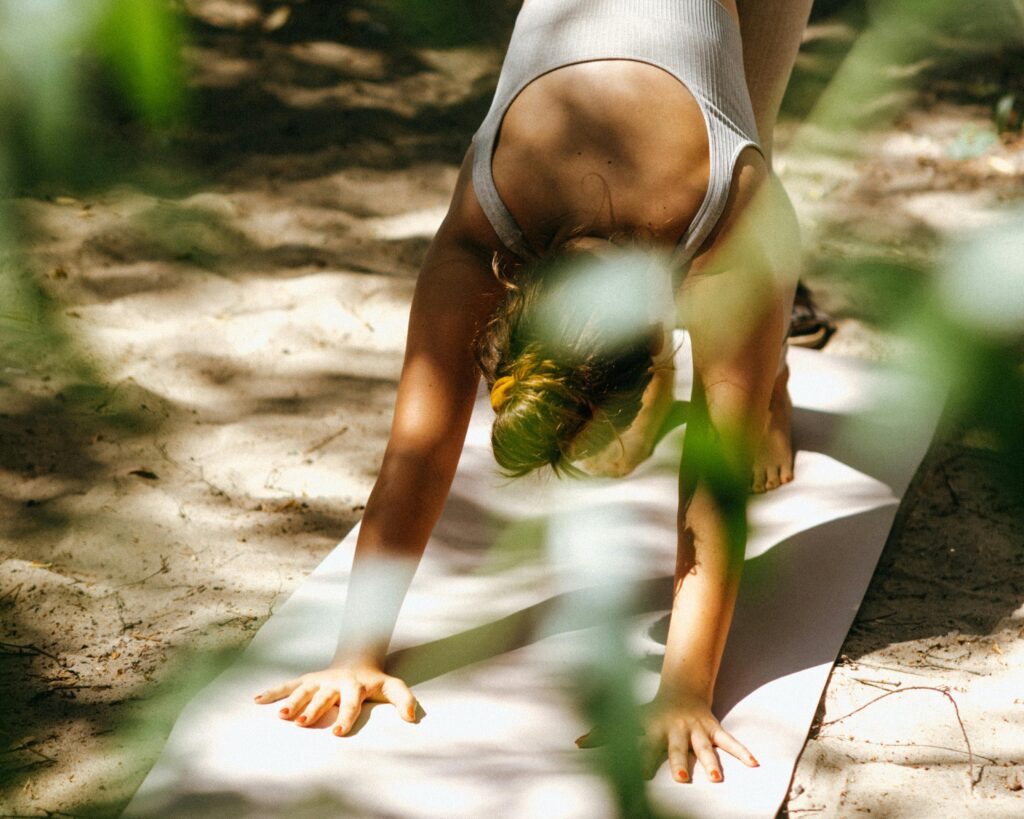
Perhaps we’ve never thought about how we walk, sit, or breathe. Seemingly unconscious, everyday movements carry a story of our inner state in the background. When the nervous system is balanced, the body moves freely, movements are natural, and breathing flows effortlessly. But when the system is under strain, something changes—movement becomes restricted, breathing shallower, and muscles tense and ready to defend.
The nervous system is like a communication network that constantly gathers information from the environment and the body, deciding how we will respond. It controls muscles, joints, and balance, but also shapes our sense of safety. When we feel safe, the body allows freedom of movement. When we feel threatened—even unconsciously—the body subtly closes, restricting our mobility to “protect” us.
How stress changes our movement
Under stress, the body often shifts into one of its defensive modes: fight, flight, or freeze. For some people, stress speeds up movements and breathing; for others, it slows them down, making them stiff and restricted. For example, in a prolonged state of tension, the shoulders may remain constantly raised, steps shorter, and gaze directed downward. These are all signals the body sends, even if we don’t consciously notice them.
These changes don’t happen because something is “wrong” with us, but because the body is doing what it knows best—protecting us. The problem arises when this protection becomes constant and no longer serves us, instead limiting us in life, relationships, and movement.
Freedom of movement as an indicator of inner state
Free, fluid movement is a sign that the nervous system trusts we are safe. Movements then become relaxed, spontaneous, and without unnecessary strain. In this state, we can dance, walk, or even sit in a way that doesn’t expend excessive energy. When the system is dysregulated, movements become stiff or restricted. This is not just a physical issue—it reflects our inner emotional and mental state.
That’s why working with the nervous system—through somatic practices, breath regulation, and gentle restoration of movement—is not just work on the body, but also on our sense of freedom in daily life. Only when the body trusts that it is safe can we truly feel the freedom of movement.
Restoring freedom to the body
The good news is that our nervous system has the capacity to change. Through small, gradual movements, we can teach the body to feel safe again. This can be as simple as stretching with mindful breathing, gently rocking the body, or walking in nature while paying attention to the sensation under your feet
These small steps, though they seem simple, send powerful messages to the nervous system: “You are safe. You can move freely.” Over time, the body remembers this, and we become more mobile not just physically, but in life—ready to step into new experiences.