
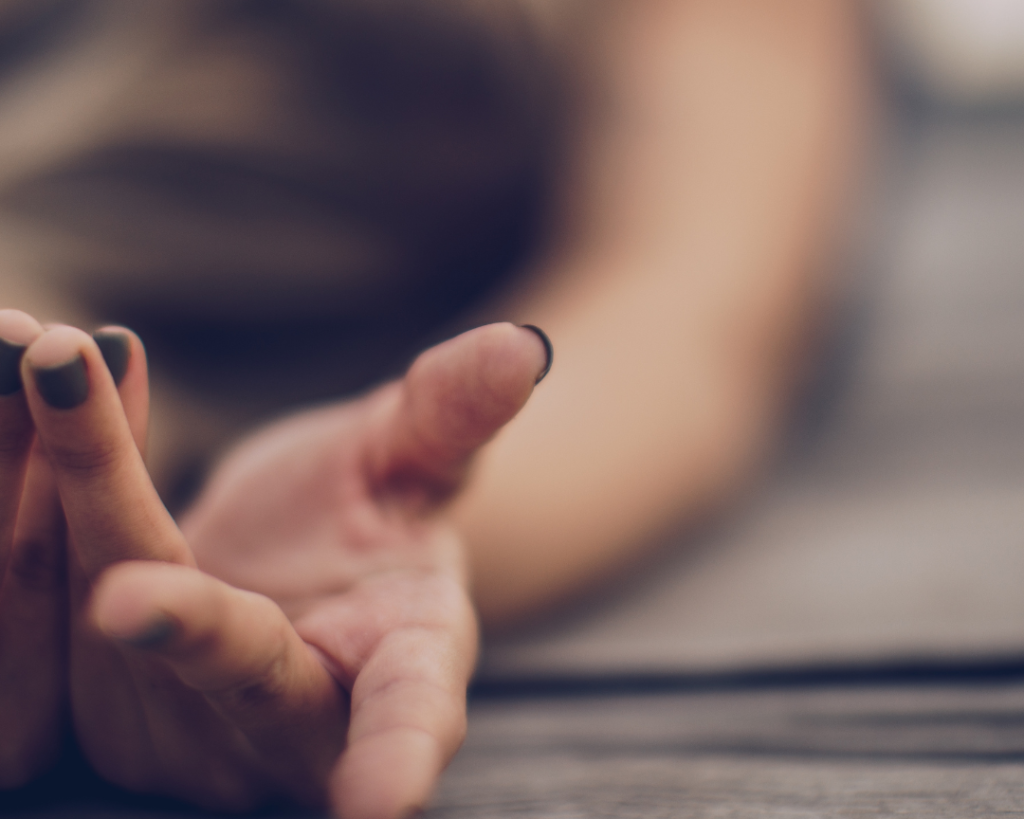
Maybe you’ve experienced it, even if you never knew what it was called.
The conversation starts heading in a direction that doesn’t sit right with you—and instead of responding, it’s as if you “shut down.”
Or you feel that you should do something, but your body behaves as if it’s glued to the floor.
Your thoughts become foggy, your words get stuck, your breath grows shallow… and all you can do is wait for it to pass.
This is the freeze state.
It’s not laziness. It’s not weakness.
It’s your nervous system assessing that the safest thing to do right now is—nothing.
And to know how to return from it to life, we first need to understand—how it arises.
How the freeze state arises
The freeze state is part of our innate survival mechanism.
When your brain assesses that the danger is too great to fight or flee, the body chooses a third option—freezing.
We see this clearly in animals: a deer sensing a predator suddenly stiffens, almost stops breathing.
If the predator gives up, the deer quickly “shakes it off” and moves on.
With humans, it’s different.
We often don’t “shake off” stress from our bodies. It stays deep within us and slowly becomes our way of functioning.
Then the body, even in situations that aren’t dangerous, reacts as if life is at risk.
And it doesn’t have to be a dramatic event—it can sneak into completely ordinary moments.
What this looks like in everyday life
The freeze state isn’t reserved only for major crises.
It also appears in small things that at first glance seem unrelated to survival.
You might notice it when:
- You delay an important conversation because you feel a “stone” in your stomach.
- You can’t reply to a message that stirs up anxiety.
- You feel like you’re standing “aside” from your own life.
- Your body stiffens when someone raises their voice, even though you know you’re not in danger.
And that’s when the question everyone eventually asks themselves arises: if I know what I want to do, why can’t I get moving?
Why is it so hard to get moving?
Maybe you’ve heard that sentence: “Just start!”
But when you’re in a freeze state, it’s like being told to “walk” while your leg is still broken.
The body isn’t ready.
Before it can move, it needs to feel safe.
Safety isn’t just a thought—it’s a feeling in the body.
Without it, any attempt to “push” into action can result in an even deeper withdrawal.
That’s why coming out of the freeze state is not a process of force, but of gentleness and trust.
How to come out of the freeze state—slowly and with respect
This is a path of restoring trust between you and your body.
It begins in the small things—in what you can do right now, without force and without sudden leaps.
- Micro-movement —the whole body doesn’t move at once. Gently move your fingers, slowly rotate your ankles or shoulders.
- Contact with the present moment —feel your feet touching the ground. Press them firmly and allow the weight of your body to sink down.
- Warmth —warm your hands or feet. Freeze often comes with a sense of cold—warmth helps the body “come back.”
- A safe gaze —look around the room for something that brings you calm and stay with that image for a few breaths.
- Small choices —decide now, in this moment, something simple: which cup you will take, what you will do first after reading.
Each of these steps is a message to your nervous system:
“It’s safe. We can move.”
Life after the freeze state
Returning from the freeze state isn’t just about moving again—it’s a return to yourself.
Movement ceases to be a threat and becomes a way to feel that you are alive.
Decisions cease to be a burden and become an opportunity to choose the life that suits you.
You don’t have to return overnight.
But remember—your body isn’t “broken,” and you’re not “stuck” forever.
With the right support and small steps, you can return to movement, to presence, and—to life.
Read more about it in the story Your nervous system and freedom of movement